Monday, September 25, 2017

It's Getting Hot In Here...


Hey y'all!

This week I want to talk about the importance of TEMPERATURE to your growing systems. All species of plants have specific growing temperatures in which they thrive, so it's crucial to do your homework. If you are unable to adjust the temperature of your setup, plant only the species that will do well in the environment that you have to work with!

Lettuce is a great example of a plant that likes relatively cooler temperatures. This garden staple grows best in a range of 50-75 degrees Fahrenheit, but those values also depend on the variety. Much colder or hotter, and the plant will be stunted or die. Warmer temperatures can also cause the lettuce to "bolt" (flower), and be bitter.

Below is a picture of two columns of Bibb lettuce currently in our grow room. Although we do not have a thermostat controlling the temperature of our setup, one side of the room is consistently around five degrees cooler due to the location of our ventilation system. The tower on the left was placed on the cooler side of the room and the tower on the right was placed on the warmer side of the room. All of these plants were started at the same time. Notice the HUGE difference.


The takeaway? Something as simple as five degrees in temperature could be the difference between garden success and failure. So it is definitely worth researching!

Hope this was helpful, and that everyone has a great week!
- Rachel 🌱👩🏼‍🌾

Tuesday, September 19, 2017


Hi there! Tori here, with a very exciting Green Team update! 🌱

Since the semester began, Rachel and I have been very busy in the Grow Room - planting and transplanting, monitoring and adjusting, researching and experimenting. We started from scratch, and in only one month, we have begun to transform the Grow Room into a production operation we are very proud of. It's been an incredibly rewarding learning experience, and all of our hard work is about to pay off!

Starting tomorrow, the Blair-Shannon Dining Center will be serving our produce, freshly picked from the vertical gardening towers that will be on display there for you to see!

I am beyond excited for you to enjoy our food, and we look forward to providing you with many more nutritious meals in the near future. Check back next week for a look into how we did it so fast!

Friday, September 15, 2017

Just a Tad Salty...

Hey y'all!

Hope everyone has been enjoying this F A L L weather as much as I have been! 🍂

Rachel from the Green Team speaking, and I'm happy to report that the Grow Room is off to a good start! Tori and I are enjoying watching the progress our little ones are making!

After experiencing some irregularities in our EC measurements in our nutrient solution, Tori and I researched the issue and came to the conclusion that we have a buildup of salts in our system. Why is that bad? Excessive salts in the rooting zone can cause stunted plant growth and other problems as well.

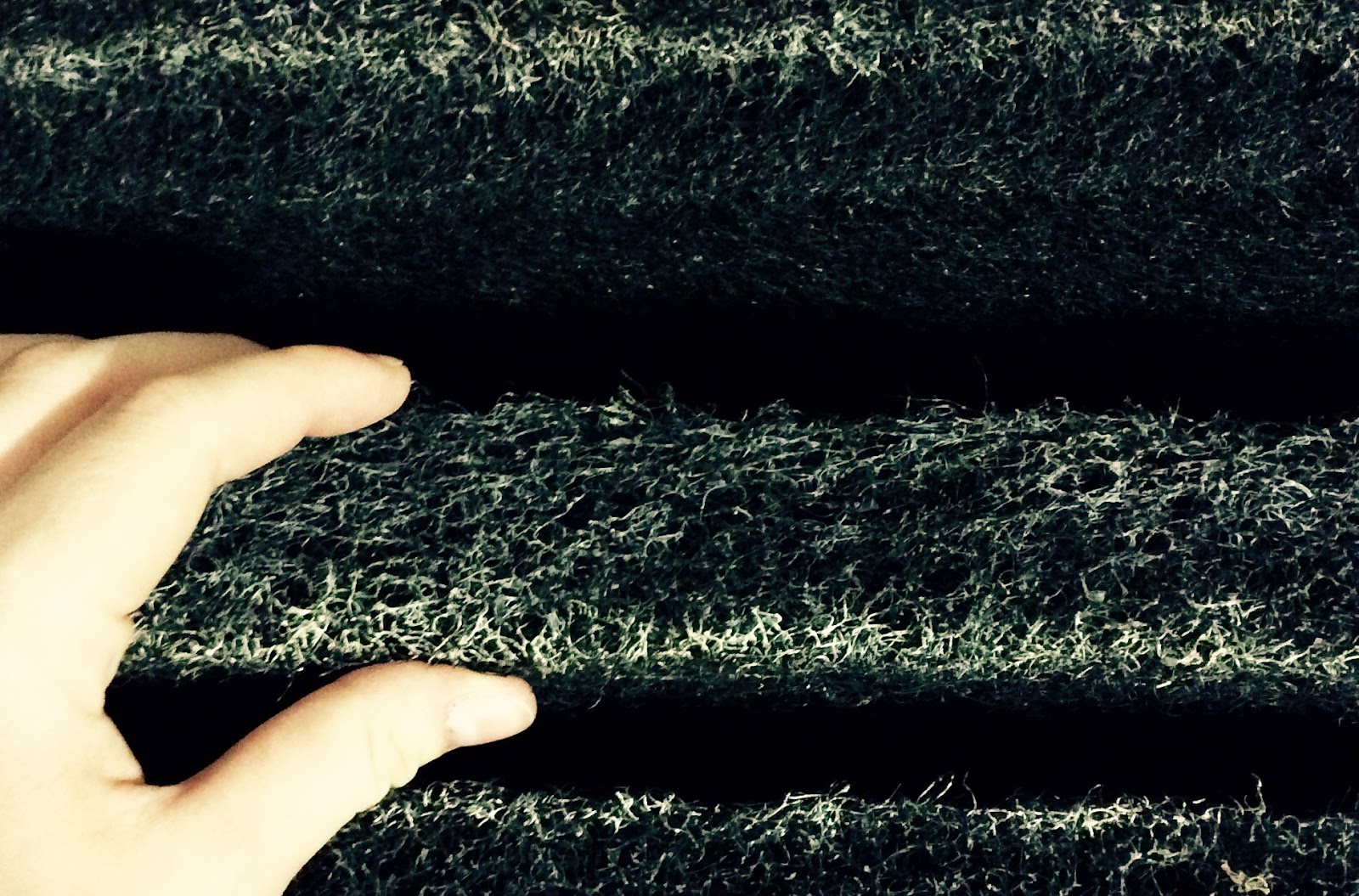
Tap water has salts already present in it, but these aren't necessarily nutrients the plants can use. The salts can build up in the tank and growing media (pictured below as white crusty deposits) over time. We completely flushed the system and cleaned the sponges, so hopefully we will start seeing some changes!


We'll keep you posted on our progress, but in the meantime ... have a great weekend everyone!

Rachel 🌿

Tuesday, August 29, 2017

New Faces of the Green Team!

Hey, y'all!

Classes are underway again here at Missouri State University, and with a fresh start to a new school year come some new faces for the MSU Chartwell's Green Team! Rachel and Tori here, and we are super excited to share our hydroponic adventures with you this coming semester!


Both of us are proud to be students in the Darr College of Agriculture here at MSU. Tori moved here one year ago from her hometown of Houston, Texas, and has loved being a Bear! This semester, she is completing her Bachelor's degree in Natural Resources with an Emphasis in Entomology. At the same time, Tori is also beginning her Master's degree in Plant Science through the Accelerated Masters Program. She is looking forward to learning about hydroponics and sharing her discoveries with you! Rachel is currently a junior and pursuing her Bachelor's degree in Environmental Plant Science-Crop Science. She plans to minor in Horticulture and is also a part of the Accelerated Masters Program, through which she hopes to get a Master's degree in Plant Science. Originally from a large beef farm near Hartville, Missouri, Rachel has grown produce her whole life (including selling at Farmers Markets) and and is excited to learn more about hydroponics!


But enough about us, what we really want to share with you is what's been going on in the Grow Room! This semester we are starting totally fresh, which means that the two of us have been very busy planting and transplanting to get things rolling. Coming soon to a dining hall near you...fresh, delicious, and nutritious produce. Stay tuned!

🌱 Here's to a great start of what's sure to be an unbe-leaf-able semester! 🌿

Talk to you soon!
Rachel & Tori

Saturday, May 6, 2017

New Seed and Plant Varieties

Hey guys! This week for the blog we are trying something a little different, a video blog. In our video we give you a brief tour of the room as well as introduce you to some new plants we just got in as well as some seed! I have posted a link to the video bellow, hope you enjoy!

https://drive.google.com/open?id=0Bw2Ac1Qt9yX5dmlQZGlkZVdld1k

Sam and Ally

Friday, March 31, 2017

System Maintenance

Hey guys! I hope everybody has had a fantastic week!
We have a few new starts in the grow room this week! We have started some more basil and kale. We have also added a couple of new plants to the system: radicchio and mustard.
In a hydroponic system, care and maintenance are key in being successful. Lately in the grow room Sam and I have started to run into an issue with clogged emitters. This is a result of algae buildup. Algae formation can take place when your solution has high concentrations of nitrates as well as having exposed stagnant or slow moving water.

The picture above is an example in our system  of an area that has some algae buildup. There are a couple of ways to help prevent buildup. If at all possible you should find a way to not have large areas of exposed water. Having large areas of exposed water increases your potential for buildup and the chance for algae to get in your system. The picture below is an example of having as little exposed area as possible. 
If you are unable to have this in your system, you will just have to make sure to clean your system out regularly and to watch your emitters for clogging. If you do get clogged emitters you can either blow on one end to get the algae out or you can soak them in a 2 parts water to 1 part bleach solution like pictured below.


Sam and Ally

Thursday, March 2, 2017

Harvesting

Hey ya'll! I hope you guys are having a fantastic week!
This past week in the grow room we got to do our first harvest! We were able to harvest some chervil and basil. Since each plant needs to be harvested different ways, we thought that we would walk you through the process on harvesting both chervil and basil!
To harvest chervil you should wait until the plants are at least 5 inches in height. When you go to harvest you just need a pair of clippers, we use needle nose ones. These aren't as bulky as bypass ones and we find them easier to use.

When you go to harvest the chervil, make your cut about half an inch up from the base of the plant. This leaves an adequate amount of tissue for regrowth if you would like to get a second harvest out of your plants. Once harvested it is best to rinse your produce to insure there are no containments on your chervil.


Prior to the grow room, I had never heard of chervil and didn't know what it could be used in. In case I'm not the only one, I found a recipe that you could use your chervil in and have provided the link below.
Basil can be harvested at the same height as chervil, at least 5 inches. When harvesting basil, the cut needs to be made right above the first node on the stem. This leaves a couple branches on the plant and helps to restimulate regrowth giving you multiple harvests.

Again, after harvesting it is recommended to rinse your produce. Once you have done so your produce is ready for consumption! Between harvests of different plants, make sure to rinse off your clippers each time. This will decrease the potential for the spread of any pests if they are present.
Basil is personally one of my favorite herbs and can be used in a variety of cooking recipes. I have provided a link to a recipe below that you could incorporate your basil into. Not only does basil taste good in a meal, it also smells amazing! I think the smell of basil can be seen as a stress reliving smell and can make any space smell refreshing.


Here are the recipe links!
Chervil: http://camillestyles.com/food-and-drink/morning-meals/baked-egg-with-ricotta-thyme-chervil/
Basil:http://kitchenbowl.com/recipes?q=Basil%20mozzarella%20grilled%20cheese

Happy harvesting everybody!
Ally and Sam